DEV BLOG / 06
I needed to see the thing on screen
Preparing roster, player and game views after the first season work.
Game screenshots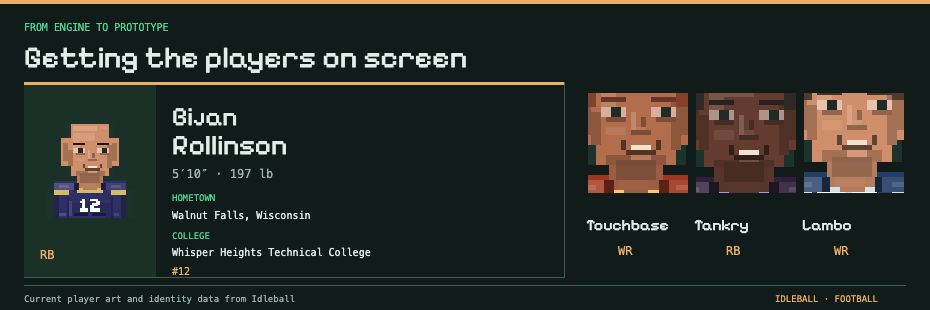
By the previous update, the work had grown from individual players to matchups and then season information. Most of it still lived in VS Code. I was ready to find out whether I could make it usable outside my own head.
I didn’t have two finished engines to wrap in some buttons. I had a foundation, a list of things I knew needed work, and probably another list I hadn’t discovered yet.
Apparently I’d been building a football game on the assumption that everyone would enjoy reading my data. I hadn’t even checked whether I enjoyed reading my data.
What changed since the last post
- I chose the first views the prototype would need. A roster, a player profile and a way to follow a game came before the rest of the interface.
- I started grouping information by the job it served. Choosing a lineup and following a result needed different things on screen.
- The work shifted toward decisions a manager could actually make. Having player data available wasn’t the same as making it useful for picking a team.
- I looked for where the engine work would meet the screens. Player identity, roster information and results needed to be understandable together.
- I had a smaller starting point for the prototype. Get the player-to-roster-to-game route working, then build out from there.
Putting it on screen
These are prototype screens for the roster and player information.
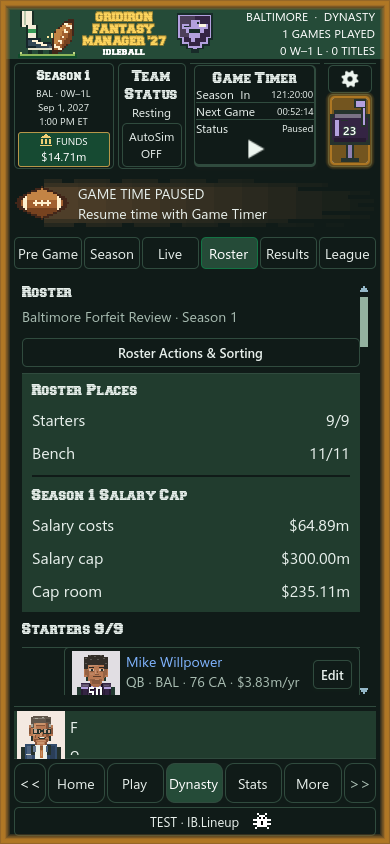
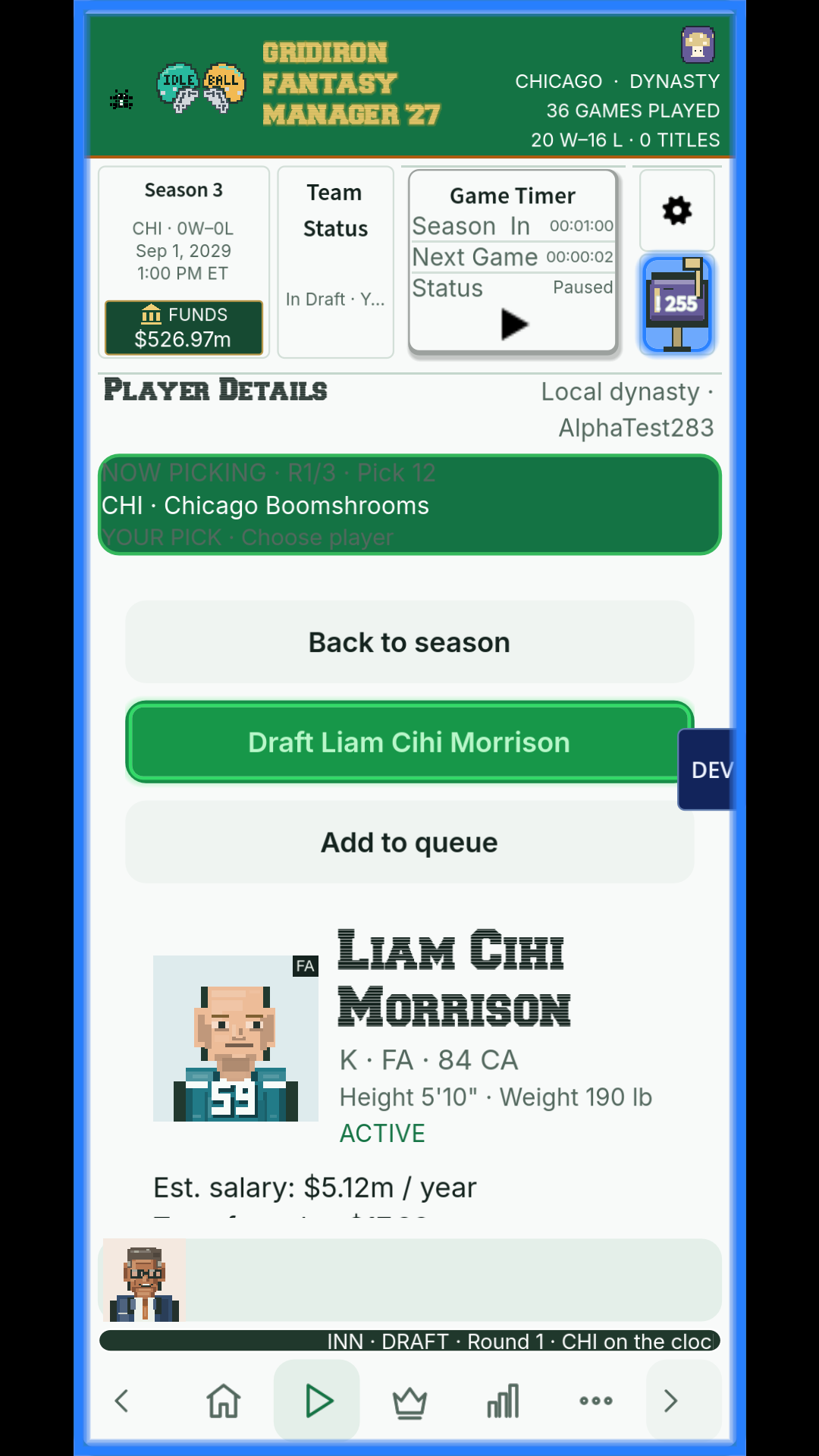
Time to let the screens expose my mistakes
My coding was in a better place than when I started. I could usually read a part of the project and change it without first reminding myself what I’d been trying to do. Game development was still another matter. I was about to learn a new set of tools while finding out which of my earlier choices would survive being put on screen.
I expected that to send me back into both engines. If I couldn’t explain a player in a profile, or make sense of a result beside the selected team, I couldn’t blame the layout for everything.
The next update is where I moved into Godot and started putting those views together. It was time to see something besides output in an editor.