
DEV BLOG / 05
One game was only the start
Moving from individual matchups to a roster, schedule and results that carry forward.
Game screenshots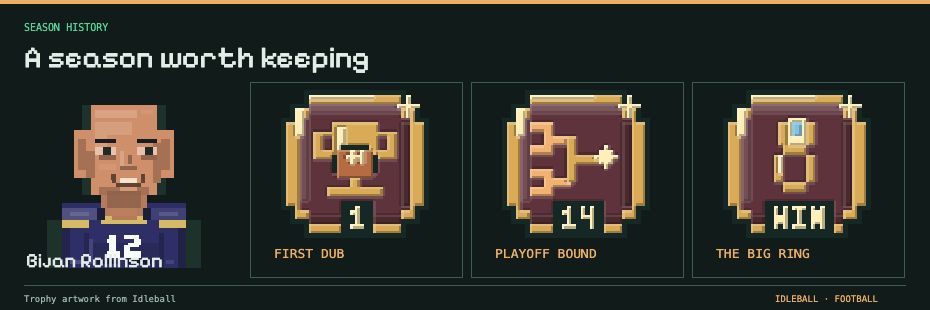
The last post was about understanding one game’s result. A season made that job considerably bigger. The same players had to come back next week, and the previous result had to stay put.
I wanted a football management game, after all. A button that produced an interesting score wasn’t going to keep anyone managing a team for very long.
What changed since the last post
- The work expanded from a matchup to a schedule. I started working out what had to follow the same team from one game to the next.
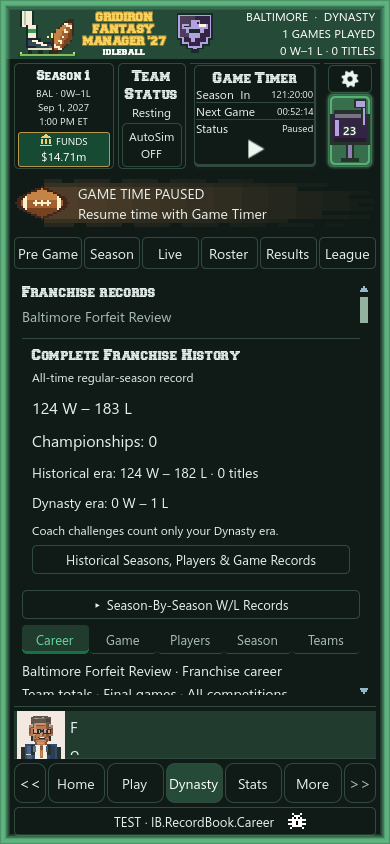
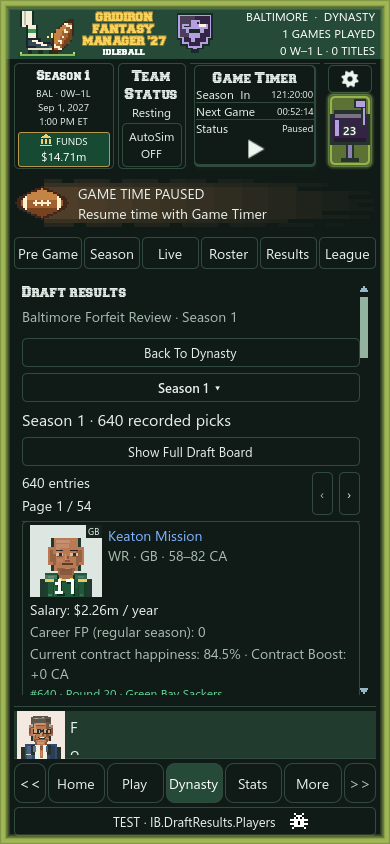
- Keeping results became part of the job. Earlier games needed their own history instead of disappearing once the next matchup ran.
- Roster continuity needed clearer handling. Changing today’s team couldn’t quietly change who had played in an earlier game.
- I worked on the boundaries between players, games and season history. They were related, but treating them as one growing pile of information was making later changes harder.
- Season results started giving the management side a purpose. I could think about the team’s next decision with its earlier games in mind.
Keeping what happened
Two prototype views for the history I wanted the game to keep.
The boring bits were doing useful work
It’s easy to get excited about championships, records and a long coaching career. I certainly did. The job in front of me was much less glamorous: keep the roster and its results together properly, then see what broke when I moved on.
I was mentally designing the trophy cabinet while the game still needed help remembering last week’s team. Very sensible sequencing on my part.
I was getting better at splitting up a problem. Early on, I would often try to solve several layers of the game at once. By this point I could usually find one smaller piece to work through. The project felt a bit less like a room where every drawer was open.
There was still plenty I couldn’t judge from engine output alone. I could talk about making a lineup, but I hadn’t yet given anyone a sensible screen to make one on.
That was the next step: work out what this data needed to look like as a game.